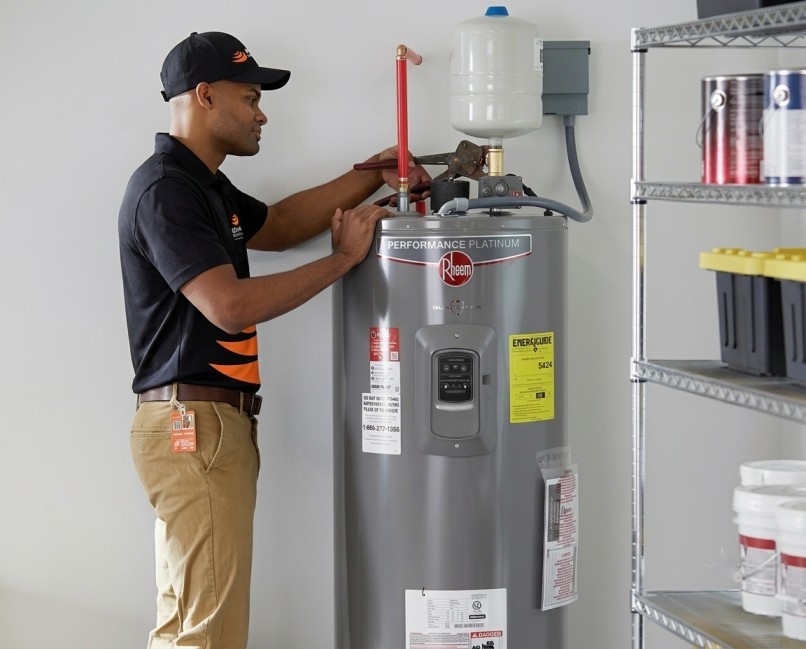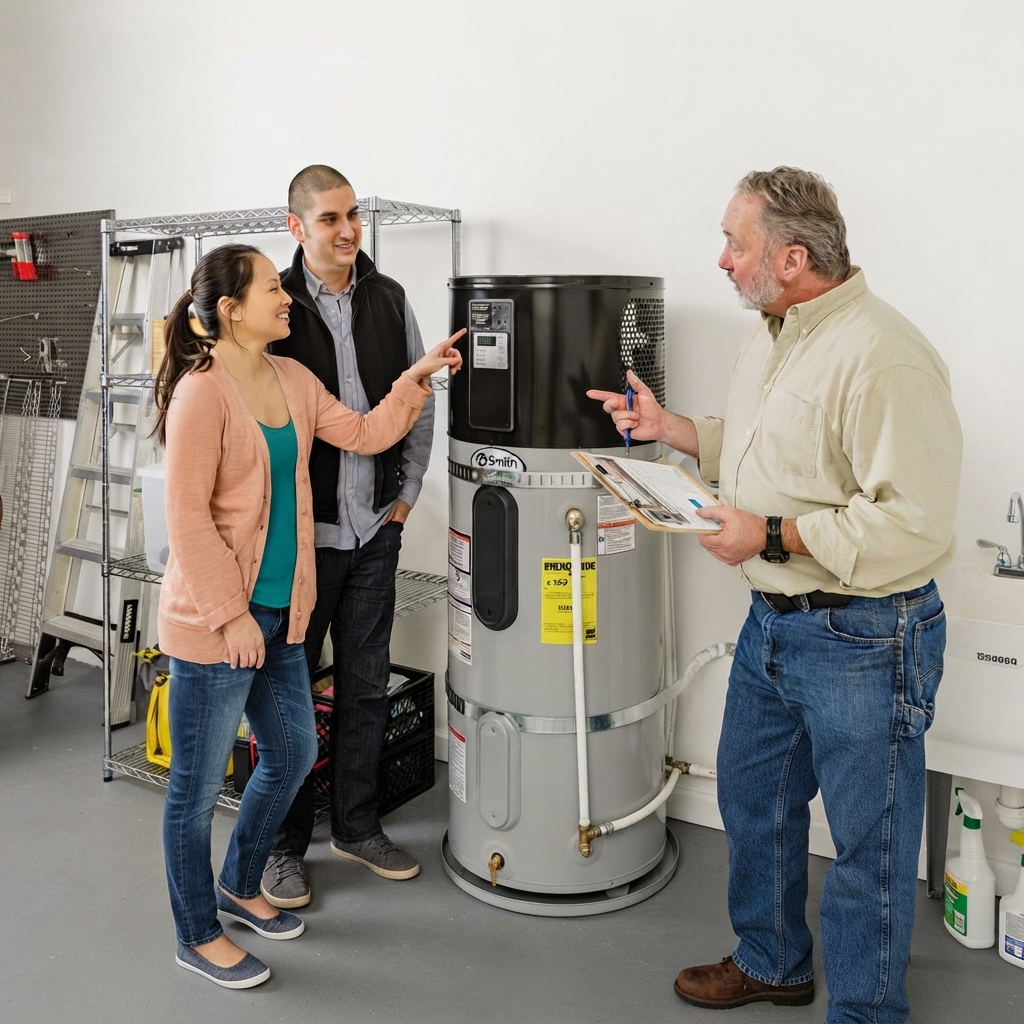
Hot water is essential to everyday life, from showers and laundry to dishwashing and household comfort. Choosing the right water heater is one of the most important decisions homeowners make for efficiency, reliability, and long-term cost control.
This guide covers the fundamentals of buying a new water heater, including system types, sizing, fuel considerations, efficiency ratings, installation expectations, and maintenance best practices.
Use this resource to make a confident decision and choose a water heater that matches your family's hot water needs and budget.
Types of Water Heaters
Water heaters differ by how they heat water, how they store it, and what fuel source they use. The right option depends on your home setup, usage profile, and long-term goals.

1. Tankless Water Heaters
Tankless systems heat water on demand and provide a steady hot water supply without storing it in a tank. They are energy-efficient and space-saving, making them a popular long-term choice for many households.
3. Heat Pump Water Heaters
Heat pump models use electricity to move heat from surrounding air into the water. They can be highly efficient and lower operating costs, especially in suitable installation spaces.
3. The Power Vented Water heaters
The Power Vented Water heaters are a type of water heater that uses a power vent to exhaust the combustion gases out of the home. They are a popular choice for many homeowners because they are a cost-effective and efficient way to heat water.
4. Conventional Storage Water Heaters
Storage tank water heaters keep a set amount of heated water ready for daily use. They are widely used and cost-effective up front, though standby heat loss can increase energy use over time.
Choosing the Right Water Heater for Your Home
Before selecting a model, assess your family size, peak hot water usage, and fuel availability. These factors directly affect comfort and monthly operating costs.
Sizing Considerations
Sizing should account for both normal daily demand and high-usage periods. Undersized systems run out of hot water too quickly, while oversized units may waste energy.
- Family size and daily hot water habits
- Peak demand times and simultaneous usage
- Required flow rate and temperature rise
- Fuel source availability and operating costs
- First-hour rating for tank-style systems
Not sure what water heater size is right for your home? Our team can assess your usage and recommend the best-fit system.
Schedule a Free In-Home AssessmentEnergy Efficiency and Environmental Impact
Efficiency ratings help compare models and estimate long-term operating costs. Higher efficiency often means lower utility bills and reduced environmental impact.
ENERGY STAR Certification
ENERGY STAR models meet strict efficiency standards and can help lower annual utility costs while reducing environmental impact.
Energy Factor (EF)
EF measures overall water heater efficiency by accounting for recovery performance and standby losses. Higher values indicate better efficiency.
Uniform Energy Factor (UEF)
UEF offers a modern and detailed efficiency measure based on usage profiles, standby losses, and cycling performance.
Professional Installation and Maintenance
Professional installation protects safety, performance, and warranty coverage. A licensed team ensures proper placement, secure connections, and code-compliant setup.
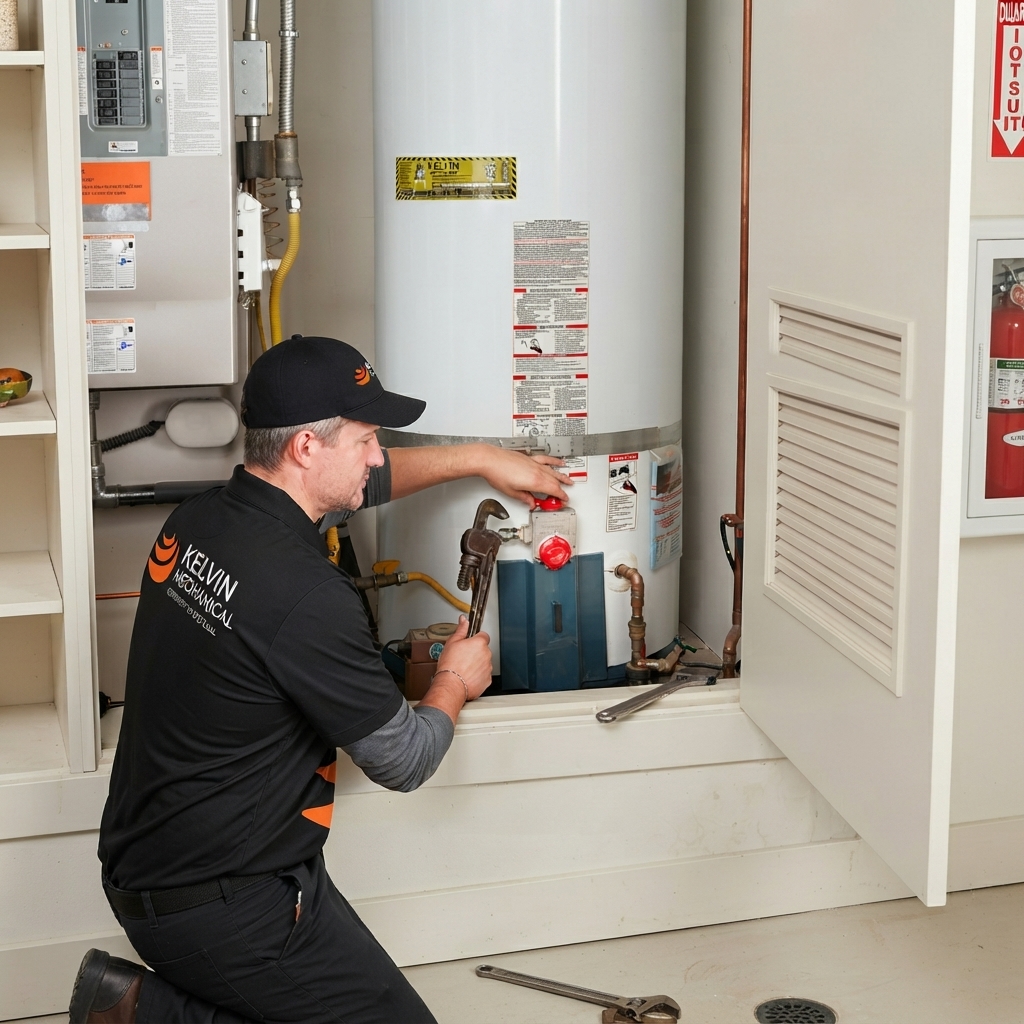
Water Heater Installation Process
In-Home Assessment: A licensed technician reviews your home, water usage, and installation area to recommend a system that matches your comfort and efficiency goals.
Sizing Verification: Before installation, we verify proper size using household demand, fuel type, and first-hour requirements so your system performs reliably.
Professional Installation: Our team installs and secures water heater plumbing, exhaust venting, gas, and electrical connections according to local codes and manufacturer standards.
Safety and Water Checks: We perform complete safety inspections and test water performance to confirm your system is operating correctly before project handoff.
Maintenance Tips for Longer Lifespan
- Flush the tank periodically to remove sediment buildup
- Inspect anode rods and replace when needed
- Check for leaks, corrosion, and pressure concerns
- Test safety valves and thermostat operation
- Schedule annual professional maintenance inspections
Need help with installation or annual service? Kelvin Mechanical offers dependable water heater support year-round.
Book Water Heater ServiceUnderstanding Water Heater Costs
Water heater value is more than the purchase price. Compare upfront investment, installation requirements, operating costs, and expected lifespan to choose the best long-term fit.
- Tank systems are typically lower upfront cost
- Tankless models usually cost more initially but can reduce long-term operating expenses
- Permit requirements and installation complexity can affect total project cost
- Higher-efficiency models often provide better long-term value over system lifespan
Keep Hot Water Flowing with Kelvin Mechanical
Whether you need a new install, routine maintenance, or expert guidance on tank versus tankless, Kelvin Mechanical delivers dependable service and clear recommendations built around your home.
As a Canadian, family-owned company, we focus on safe workmanship, energy-efficient options, and long-term support for homeowners across Ontario.
Ready to choose the right water heater? Contact Kelvin Mechanical for a free in-home assessment.
Contact Kelvin Mechanical